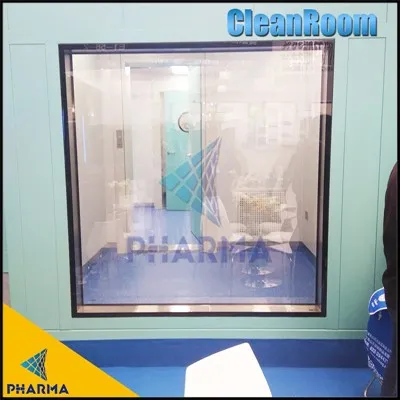
cleanroom in pharmaceutical production
A plant tissue culture cleanroom in pharmaceutical production is a place where plant propagation and research are carried out using plant tissue culture techniques. Through tissue culture, rapid reproduction, variety improvement, and detoxification of plants can be achieved, which is of great significance for improving plant yield and quality, and protecting plant resources. Meanwhile, plant tissue culture rooms are also important platforms for conducting research on plant biotechnology, providing strong support for the development of plant science.
The construction and development of plant tissue culture cleanroom in pharmaceutical production can not only bring significant economic benefits, but also enhance the country's competitiveness in the field of plant science. Therefore, plant tissue culture rooms play an important role in fields such as agriculture, forestry, and horticulture.
During the tissue culture process, the tissue culture room is susceptible to microbial contamination due to factors such as explants, culture medium, and culture environment. Microbial contamination not only affects the growth and development of plants, but also leads to tissue culture failure, causing serious economic losses.
Common contaminations in tissue culture rooms include bacterial contamination, fungal contamination, viral contamination, etc. These microorganisms can be spread through air, water, soil, operators, and other pathways, entering the tissue culture room and contaminating the culture. Microbial contamination can cause symptoms such as disease, decay, and death in plant tissues, seriously affecting plant growth and reproduction.
To prevent microbial contamination, a series of disinfection measures need to be taken in the tissue culture cleanroom in pharmaceutical production. The conventional disinfection methods include chemical disinfection, physical disinfection, and biological disinfection.
Chemical disinfection refers to the use of chemical disinfectants such as alcohol, formaldehyde, potassium permanganate, etc. for disinfection.
Advantages: Broad spectrum, high efficiency, fast
Disadvantages: prone to residue and pose certain hazards to human health and the environment.
Physical disinfection refers to the use of physical methods for disinfection, such as ultraviolet radiation, high temperature, high pressure, etc.
Advantages: No pollution, no residue, etc
Disadvantages: The disinfection effect is greatly affected by environmental factors and the operation is complex.
Biological disinfection refers to the use of biological agents for disinfection, such as antibiotics, bacteriophages, etc.
Advantages: Strong specificity, environmentally friendly
Disadvantages: such as unstable disinfection effect and easy development of drug resistance.
|
Product name |
cleanroom in pharmaceutical production | ||
|
ISO CLASS |
class 10000 ISO 7 |
||
| air cleaning | high effect filter unit | ||
| project Size | 12 feet high | ||
| humidifier control | 60% | ||
| door | clean room door | ||
| sandwich panel type | rockwool PU sandwich panel | ||
| production standard | GMP standards in the EU | ||
| cleanroom use | flower plant group up room | ||
Company profile


Hot Tags: cleanroom in pharmaceutical production, China cleanroom in pharmaceutical production manufacturers, suppliers, factory